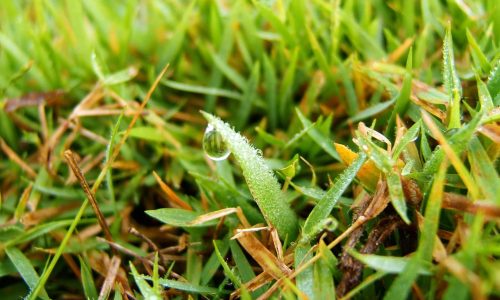
Bermuda grass typically develops shallow roots in 2–3 weeks and reaches full establishment—ready for heavy use—in 6–8 weeks. Though it may look mature after 4–6 weeks, complete root anchoring in the soil often requires 6–12 weeks, varying by temperature, watering, and soil conditions.
Week-by-Week Bermuda Grass Establishment
Week 1: Sod Laid and First Roots Form
Immediately after installation, Bermuda sod is still surviving on the moisture and root mass it brought from the farm. The first 72 hours are the most critical; water deeply within 30 minutes of installation and keep the soil consistently moist.
By day 5–7, tiny “anchor roots” start extending from the sod into the soil below. You can test this by gently tugging a corner of the sod; if it lifts easily, it’s not yet rooted.
Week 2: Root Establishment Accelerates
The sod is knitting into the soil. At this stage, light foot traffic is acceptable but should still be limited. Continue daily watering, adjusting based on rainfall.
Week 3: First Mow
If new growth is visible and the sod resists a gentle tug, you can usually mow for the first time. Mow with a sharp blade, set high, and never remove more than one-third of the grass’ height.
Weeks 4–6: Deep Root Development
Bermuda roots push deeper into the soil, sometimes reaching 4–6 inches. Water frequency can shift from daily to 3–4 times per week, with deeper soak times. Begin a light first fertilization around week 4 if not done at installation.
Weeks 6–8: Established Lawn
By this point, the lawn should feel firm underfoot, resist lifting, and show uniform new growth. Transition to a normal maintenance watering schedule of 1–1.25 inches per week.
Season One: Peak Density
While the lawn is “established” at 6–8 weeks, it continues to thicken and mature for the rest of the growing season as stolons and rhizomes spread. Expect maximum density and color by late summer of the installation year.
Factors That Speed Up or Slow Down Establishment
What Speeds It Up
Installing during peak season (April–August)
Proper site preparation and soil contact
Consistent, deep watering
Appropriate starter fertilizer
Premium hybrid varieties (TifTuf, Celebration)
What Slows It Down
Late-season installation (October–December)
Compacted, poorly prepared soil
Under-watering or over-watering
Heavy traffic before roots establish
Excessive shade
Extreme heat with inadequate irrigation
How to Tell If Your Bermuda Sod Is Established
Three simple tests:
Tug test: Gently lift a corner of the sod. If it resists strongly, the roots are anchored.
Growth test: You should see fresh, vibrant new blade growth between mowings.
Seam test: Sod seams should have knitted together with no visible gaps.
Watering During Establishment
Stage
Frequency
Duration
Days 1–14
Daily (1–2x)
Keep soil consistently moist
Weeks 3–4
4–5 times/week
20–30 min per zone
Weeks 5–6
3 times/week
30–45 min per zone
Week 7+
2 times/week
Deep soak, 1–1.25″ total
Fertilizing New Bermuda Sod
Most quality installations include a starter fertilizer rich in phosphorus to promote rooting. Follow-up fertilization at 4–6 weeks with a balanced formula (such as 16-4-8) accelerates full establishment and deepens color.
Common Establishment Problems
Yellowing sod: Usually overwatering or poor drainage.
Lifting seams: Sod shrinkage from underwatering—water more deeply.
Brown edges: Drying at seam lines; keep edges moist.
Slow rooting: Compacted soil or poor soil contact; roll the sod.
Get Bermuda Sod Installed Right the First Time
TurnKey Grass installs Bermuda sod across the New Orleans metro: Metairie, Kenner, Mandeville, Slidell, and beyond. Our crews handle the prep, grading, and roll-out that make the difference between a lawn that establishes in 6 weeks and one that struggles for a season.
Light, essential foot traffic is fine after the first week. Avoid heavy use, play, or pet traffic until week 3 at minimum.
When can I mow new Bermuda sod?
Typically 2–3 weeks after installation, once the sod resists a gentle tug and you see active new growth.
How often do I water new Bermuda sod in Louisiana?
Daily for the first two weeks, then gradually taper to 2–3 deep waterings per week by week 6.
Can Bermuda sod fail to establish?
Yes, typically from poor soil prep, insufficient water, late-season installation, or excessive shade. Professional installation dramatically reduces the risk.
Does Bermuda sod need to be rolled after installation?
Yes. Rolling presses sod firmly into the soil, eliminating air pockets and ensuring consistent root contact.
How soon can I apply pre-emergent on new sod?
Wait until after the first 2–3 mowings (usually 6–8 weeks) to avoid interfering with root establishment.





 TurnKey Grass
  If new growth is visible and the sod resists a gentle tug, you can usually mow for the first time. Mow with a sharp blade, set high, and never remove more than one-third of the grass’ height.