How Do You Repair Bare or Patchy Spots in a Bermuda Grass Lawn?
Bare and patchy spots are almost inevitable in a Bermuda grass lawn — high-traffic paths, pet damage, dead roots from grub attacks, dog urine, or even sun-scorched stretches all leave their mark. The good news: Bermuda grass is one of the easiest turfgrasses to repair thanks to its aggressive lateral growth. This guide walks through exactly how to fix bare or patchy spots in a Bermuda lawn, including when to patch, when to reseed, and when to call in professional resodding.
Quick Answer: How to Repair Bare Spots in Bermuda Grass
- Identify and fix the underlying cause (compaction, grubs, urine, shade, etc.).
- Remove dead material and loosen the soil.
- Patch with sod plugs, sprigs, or Bermuda seed depending on spot size.
- Water consistently for 2–3 weeks until roots establish.
- Blend repairs with the rest of the lawn with proper mowing and fertilizer.
Step 1: Diagnose the Root Cause First
Fixing the symptom without fixing the cause guarantees the spot will come back. Common causes of bare spots:
- Compacted soil — most common in paths and play zones.
- Pet urine — small, round spots with green rings.
- Grub damage — sod lifts like a loose rug.
- Fungal disease — especially large patch in cool, wet periods.
- Chemical burn — overlap patterns from fertilizer or herbicide.
- Shade — Bermuda thins under 6 hours of daily sun.
Step 2: Prepare the Spot
Clear Dead Material
Rake out dead grass, loose thatch, and debris until you’re down to soil.
Loosen the Soil
Use a hand cultivator or garden fork to loosen the top 2–3 inches of soil. Heavy clay benefits from a small amount of topsoil or compost mixed in.
Level the Area
If the spot has sunk or eroded, add topsoil to match the surrounding grade. A low spot collects water and stays bare; a high spot scalps during mowing.
Step 3: Choose Your Repair Method
Option A: Sod Plugs or Squares (Best for Most Repairs)
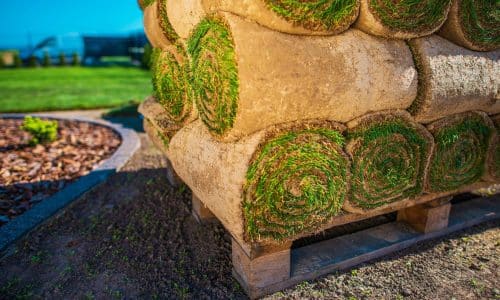
Cut small squares or round plugs from a Bermuda sod piece and set them into the prepared bare area. Press firmly for good soil contact. This is the fastest way to fill spots up to a few square feet.
Option B: Sprigs (Good for Larger Bare Areas)
Bermuda sprigs — small runners with nodes — can be pressed into prepared soil at 2–4 inch spacing. Keep consistently moist for 2–3 weeks. Sprigs are more economical than sod for mid-sized repairs.
Option C: Seed (Common Bermuda Only)
Hybrid Bermuda varieties (TifTuf, Celebration, Tifway 419) are sterile and don’t produce viable seed. Only common Bermuda can be started from seed. If your lawn is a hybrid variety, seeding will create a visible texture mismatch.
Option D: Full Resodding
For spots larger than about 20 square feet, or when patchiness covers more than 20% of the lawn, full resodding usually produces the best-looking and longest-lasting result.
Step 4: Water Consistently
| Days |
Watering |
| 1–7 |
Water 1–2 times per day to keep soil moist |
| 8–14 |
Water once per day |
| 15–21 |
Water every other day |
| 22+ |
Return to standard schedule |
Step 5: Blend Repairs Into the Rest of the Lawn
- Delay mowing the repaired area until new growth is 3+ inches tall.
- Fertilize lightly at 3 weeks with a balanced formula (16-4-8) to encourage fill-in.
- Wait 6–8 weeks before applying pre-emergent or broadleaf herbicides near new repairs.
Best Time of Year to Repair Bermuda Grass
In Louisiana, repair Bermuda bare spots between April and early August. Warm soil temperatures and active growth give the fastest fill-in and strongest rooting. Repairs done in fall or winter will typically not establish until the following spring.
How to Prevent Bare Spots in the First Place
- Aerate annually to reduce compaction.
- Rotate play zones — kids and pets should wear the lawn evenly.
- Rinse pet spots immediately with water.
- Mow at proper height with sharp blades.
- Apply pre-emergent to prevent weed invasion in thin spots.
- Inspect for grubs in late summer.
Tools You’ll Need
- Sharp hand rake
- Garden fork or hand cultivator
- Topsoil or compost
- Sod plugs, sprigs, or Bermuda seed (as appropriate)
- Starter fertilizer
- Watering can or hose with gentle nozzle
Frequently Asked Questions
How long does it take Bermuda to fill in bare spots?
With active growing conditions (April–August), Bermuda typically fills small bare spots in 3–6 weeks. Larger spots or sprig repairs take 6–10 weeks.
Can Bermuda grass repair itself?
Yes — Bermuda is one of the most aggressive self-repairing grasses. Small bare spots (under 6 inches across) often fill in without intervention during peak summer growth.
Can I throw Bermuda seed on bare spots?
Only if your lawn is common Bermuda. Hybrid Bermudas are sterile and must be repaired with plugs, sprigs, or sod to match.
Should I till before patching a bare spot?
For spots larger than about 3 square feet, light tilling of the top 2–3 inches is helpful. For smaller spots, a garden fork is sufficient.
Why do bare spots keep coming back in the same place?
The underlying cause hasn’t been fixed. Most persistent bare spots trace back to compaction, shade, ongoing pet damage, or drainage issues.
When should I resod instead of patching?
If more than 20% of the lawn is bare, thin, or patchy, full resodding is usually more cost-effective and produces a more uniform result than extensive patching.
Let TurnKey Grass Handle the Repairs
TurnKey Grass restores Bermuda lawns across St. Rose, River Ridge, La Place, and throughout southeastern Louisiana. From spot repairs to full resodding, our team delivers clean, uniform results that blend seamlessly with existing turf.
Get a Free Lawn Repair Quote →
Related grass services
Want a lush new lawn? Get a free sod installation quote from TurnKey Grass.





 TurnKey Grass