Will Scalped St. Augustine Grass Recover in River Ridge?
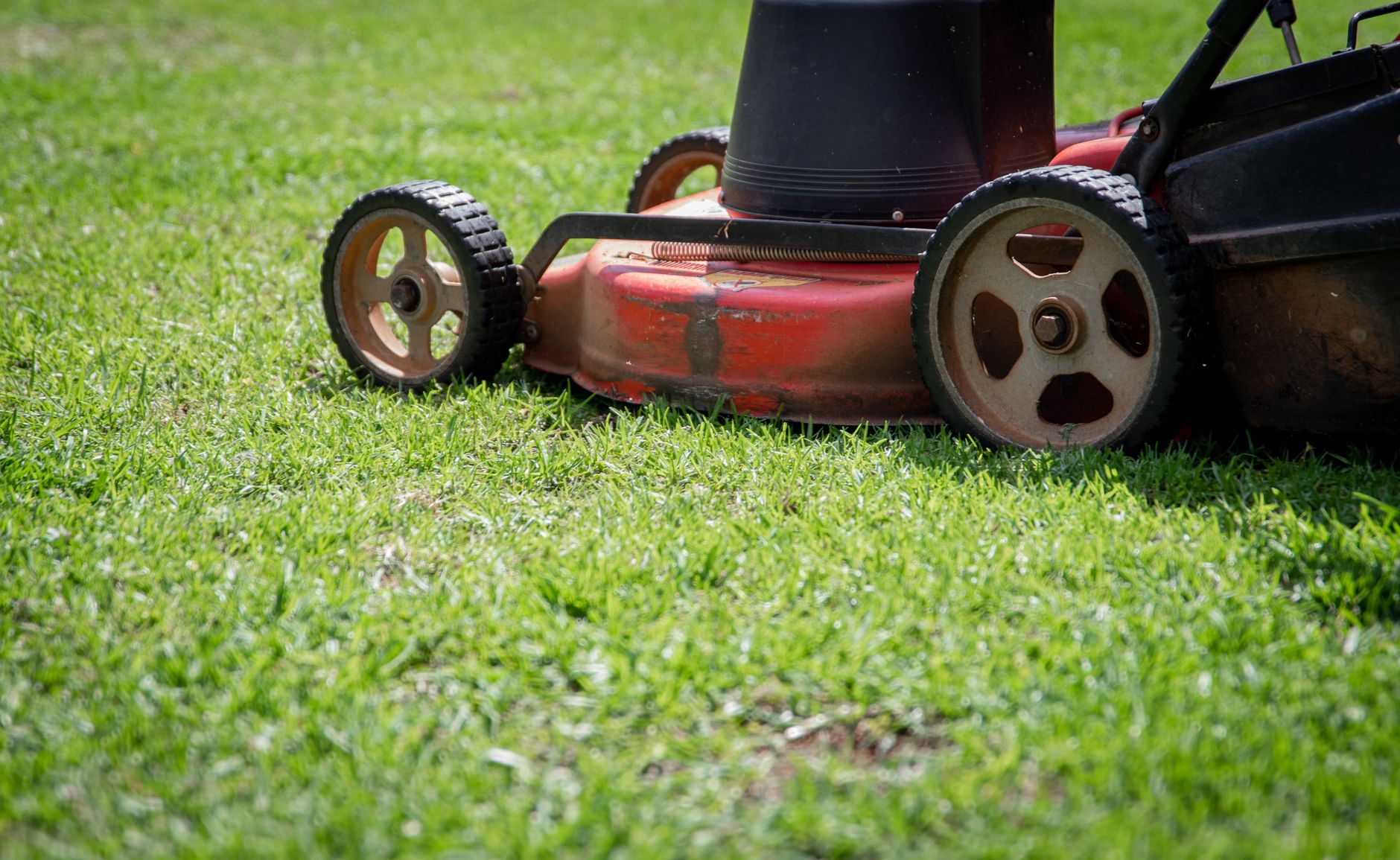
Scalped St. Augustine in River Ridge usually recovers if its runners are still alive. If the mower took them off, that spot may need new sod or plugs. Check the stolons before you do anything else.
Licensed & Insured, Best Price GuaranteeFREE Estimates4 Grass Varieties14 Metro Cities
That one check tells you most of what you need to know. When we look at a scalped lawn in River Ridge, we part the grass and look at the aboveground stems. Green, firm runners mean you’ve got something to work with. If they’re brown, dry, and brittle, or missing, the area won’t fill back in quickly from that spot.
Will scalped St. Augustine grass recover?
It depends on how much of the plant survived. St. Augustine’s growth habit makes this grass less forgiving of a low cut than some others. Mississippi State University Extension explains it well: Bermuda and zoysia can be cut very low because they have rhizomes and stolons to replenish the canopy. Centipede and St. Augustine should not be scalped, since they have only stolons to develop a new canopy.
There’s no underground backup, in other words. LSU AgCenter confirms that St. Augustine spreads by stolons, and that it does so quickly and vigorously. That’s the good news. Live runners next to a damaged patch will grow back over it once conditions are right.
We couldn’t find a published recovery time from an extension source, so we won’t give you one. It depends on the season and on how far the damage goes. Here’s how we’d read what you see:
Yellow or pale, with green stems: a good sign. The leaves took a hit, but the plant is there.
Bare soil in small spots, with live runners around them: those runners should creep in during the growing season.
Large areas with no runners: plan to replace those, since waiting mostly gives weeds time to move in.
What helps scalped St. Augustine grow back fast?
Raise the mower, then let the season do the work. Here’s the order we’d go in.
Raise the deck and keep it there
LSU AgCenter’s mowing height is 2.5 to 3 inches in sun and 3 to 3.5 inches in shade, never removing more than one-third of the blade. Leaves are how the plant feeds itself, so more leaf means faster repair. Clemson Extension notes that mowing too short stresses the turf and thins it. Sharpen the blade as well. Clemson suggests monthly on a rotary mower, and if tips look torn after mowing, it’s time.
Find out why it happened
A low deck setting is the obvious cause, but it’s rarely the only one. Thatch lets a mower sink, since the grass grows up on a spongy layer and the wheels press down. Uneven ground does it too, and scalped ridges in the same spot every week point to a grade problem. LSU says thatch can be reduced through vertical mowing in late spring to summer. Our guide to aeration and overseeding explains how aeration fits in.
Feed only when it’s growing
LSU AgCenter says nitrogen results in faster St. Augustine growth, up to 3 pounds per 1,000 square feet a year, no more than 1 pound at a time, from midspring to midsummer. One LSU agent’s example is April and June, with an optional August feeding. Outside that window, feed won’t help, and LSU warns that nitrogen applied too early or too late raises the risk of large patch.
Water when it’s dry, in the morning
LSU says normal rainfall may be enough, but irrigate during drought to prevent water stress. Early morning is best for limiting large patch. Skip the daily sprinkle. A stressed lawn doesn’t need soggy soil, and it certainly doesn’t need disease on top of the scalping.
For a full season plan, read about St. Augustine in the summer heat. If patches look different from mower damage, our post on common St. Augustine problems will help you sort that out. LSU also lists improper mowing height among the stresses that can trigger take-all root rot, so keep watching spots that don’t respond.
What if your River Ridge lawn got scalped in the fall?
Then recovery waits until spring, and that’s normal. LSU AgCenter’s calendar shows active growth from March through October, with turf dormant from November through February. It also says warm-season grasses grow slowly in soil below 70 degrees and stop growing below 60. So a lawn cut too low in late fall won’t repair itself until the soil warms.
River Ridge’s ground adds a wrinkle. Federal soil maps show Cancienne silt loam and Schriever clay at most of the points we sampled there, and the USDA places those soils on natural levees and in backswamps. The USDA says Schriever is very slowly permeable and saturated near the surface from December through April in normal years, and that Cancienne holds a saturated zone 1.5 to 4 feet down in the same months.
That timing matters. LSU AgCenter’s 2026 winter decline sheet says St. Augustine’s stolons sit within or just above the thatch layer, and they’re vulnerable to rot during long, wet, cool spells. A weakened lawn heading into a wet River Ridge winter is more exposed, and LSU names avoiding scalping as one way to reduce stress before dormancy. So through the winter, don’t fertilize, keep traffic off soggy areas, and only mow if there’s something to cut. Check it again when things green up in spring. Our River Ridge service area page covers more about local yards.
When should you replace scalped St. Augustine?
Give it a fair shot in the growing season, then replace what hasn’t come back. Sod and plugs are your only options here, since LSU AgCenter says no commercial St. Augustine seed is available in Louisiana.
Plugs: LSU’s sheet says to plant about 1 foot apart, and an LSU agent’s article gives 12 to 14 inches for St. Augustine. You can do them yourself, but you’ll need to keep up with watering and weeds until they spread.
Sod patches: cover the spot right away. Till and level first, so the new piece doesn’t scalp too. Better establishment is expected from April through September, according to LSU.
Ready to say goodbye to lawn stress and hello to a stunning green oasis? Get a free quote today and see how TurnKey Grass can make your lawn dreams a reality!